Wednesday, September 23, 2015

Lone Wolf #8: Los Angeles Holocaust

The Lone Wolf is back in the United States in the eighth edition of his Berkley Medallion paperback series. It appears as though I didn't review the previous title, PERUVIAN NIGHTMARE, but I definitely read it. You can find my reviews of the other books in the Lone Wolf men's paperback series here.

LOS ANGELES HOLOCAUST is very light on plot and ends on something of a cliffhanger, as though it were a mediocre episode of a television series. It begins right where PERUVIAN NIGHTMARE left off with antihero Wulff aboard a hijacked helicopter returning to El Paso from Peru. With him, besides a frightened pilot, is a bag of smack -- millions of dollars worth of heroin. Well, first there's a flash-forward to Wulff in an L.A. hotel, and then a second chapter about a black cop named Evans who is killed during an undercover drug buy in Harlem. It has absolutely nothing to do with anything else in LOS ANGELES HOLOCAUST, but it helped author Mike Barry get to 192 pages. He barely has enough story as it is.

So Chapter Three shows Wulff's return from Peru, and then it's into the story proper. Here's the thing with Wulff: he's fucking crazy. Reportedly written by noted sci-fi author Barry Malzberg as a tongue-in-cheek rip of men's adventure novels, which he hated, the Lone Wolf series maintains continuity throughout its fourteen volumes, focusing on a doomed protagonist who loses a bit more sanity with each novel. It's noted in LOS ANGELES HOLOCAUST that he has killed literally hundreds of people, including a whole shipful in BAY PROWLER, so it's a little disappointing that Malzberg's body count is so low in this one.

Joining Wulff (briefly) on the West Coast is Williams, his former partner on the NYPD who was stabbed in CHICAGO SLAUGHTER. The young rookie's wounds have left him bitter, making him an easy convert to Wulff's cause: blasting the shit out of the Mafia. Williams leaves his nine-months-pregnant wife in New York, buys a U-Haul full of weapons from a Harlem priest, and drives to L.A., stopping only to kill a couple of random carjackers along a Nebraska interstate.

Wulff's ultimate goal is getting back to Chicago to kill a 72-year-old mob boss named Calabrese, who has a contract out on Wulff. The book is not only light on plot, but also on action sequences. Most pages are filled with introspection. If not Wulff in woe thinking about how shitty his life is, it's a hitman wondering how to both collect the bounty on Wulff and steal Wulff's heroin or Williams pondering his marriage, his job, his new partnership, the whole goddamn shitty society. You may have guessed -- this is a pretty bleak story in a pretty bleak series of novels.

The Lone Wolf books are fascinating, of course, thanks to Malzberg's prose, but they aren't as gritty or action-packed as their rivals on drugstore shelves -- which was probably Malzberg's point. LOS ANGELES HOLOCAUST ends with the status quo intact: Calabrese is still pissed, Wulff is still pissed (and still has the smack), Williams is on his way back to New York without ever using any of the damn weaponry in the U-Haul!

Except for the cliffhanger, which puts Williams in jeopardy and Wulff on the phone, talking shit to Calabrese. It looks like the matchup is coming up...except the next book is titled MIAMI MARAUDER. So does Wulff make it to Chicago or not? I guess I'll find out.

Monday, September 21, 2015

Vigilante Force

Gene Corman, brother of Roger, was also a prolific producer of drive-in fare that was often a little classier than Roger’s with budgets a little higher. VIGILANTE FORCE, written and directed by George Armitage, who came up through the ranks at Roger’s New World Pictures on films like PRIVATE DUTY NURSES and DARKTOWN STRUTTERS, is a good movie, very well paced with plentiful action sequences and a dose of bicentennial satire.

The stars of this United Artists release are Jan-Michael Vincent (WHITE LINE FEVER) and Kris Kristofferson (CONVOY), who play battling brothers. Widower Ben Arnold (Vincent) is a tractor salesman in a rural Southern California community that is overrun by rowdy oil riggers and the violence, drunkenness, disorder, gambling, and murder that comes with them. The cops are ineffectual, so the town enlists Ben to recruit his brother Aaron (Kristofferson), a Vietnam veteran, to keep the peace.

Aaron brings his war buddies, including Viner (Shelly Novack, just off THE FBI), Beal (HALLOWEEN sheriff Charles Cyphers), and Selden (THE HOT BOX’s Carmen Argenziano), back to his home town. And, sure, the crime rate goes down. Sort of. Until Aaron and his boys decide to take over the town for themselves and operate their own crime ring. Can pacifist Ben talk some sense into his brother? In an exploitation movie aimed at drive-ins? What do you think?

VIGILANTE FORCE, despite an original screenplay by Armitage, boasts the exact plot of BUCKTOWN, released the year before by AIP (though probably a dozen B-westerns precede both films). It’s a solid premise that gives both Vincent and Kristofferson plenty to play dramatically and physically. Armitage presents it with great precision (Ben is making the town’s offer to Aaron within the first ten minutes) and an offbeat sensibility. Not only does he take care to create memorable characters and a believable and ultimately tragic relationship between brothers Ben and Aaron, but the violent climax involves an army of bank robbers dressed in colorful high school band uniforms! The stunts and fights are expertly staged throughout, but VIGILANTE FORCE also excels in its sensitive moments, such as Kristofferson’s haunting murder of a sympathetic character — an act that seals Aaron’s dark fate.


Friday, September 18, 2015

Vendetta

Dean Cain, who was a lean and solid Superman on television twenty years earlier, has packed on the pounds for this prison picture from twin directors Jen and Sylvia Soska. From WWE Studios, which produced the MARINE series, VENDETTA also stars Paul Wight — better known to wrestling fans as The Big Show — as Cain’s nemesis. Which explains why Cain had to bulk up for his role in order to believably go toe to toe with his seven-foot 450-pound co-star.

VENDETTA has a seriously dumb and implausible premise that the Soskas try to whisk aside by making the violence brutal and cruel. Perhaps they should have concentrated more on telling a good story, otherwise they wouldn’t have shown a prison bus driving through a desert to transport a prisoner from Chicago to an Illinois correctional facility. Credit is due to Cain, who plays a lot of nice guys, for giving the story’s implausibilities some weight.

Cain is Chicago cop Mason Danvers, whose attempts at bringing hulking psycho Victor Abbott (Wight) to justice are foiled when a “key witness” disappears. Hours after being sprung, Abbott heads to Danvers’ house to kill the detective’s wife (Kyra Zagorsky in a charming but shortlived performance). To get revenge — and this is where it really gets dumb — Danvers murders Abbott’s brother (Aleks Paunovic) and allows himself to be arrested. Somehow, Danvers knows he’ll be sent to the same prison as Abbott (doubtful) and placed with the general population (really doubtful).

You would think there would be an easier way to kill Abbott. Like maybe just shooting him in the head when he was kneeling over Danvers’ dead wife in Danvers’ house. Guess the movie would have been shorter though. Behind the wall, Danvers is subject to the whims of the evil (of course) warden, Snyder, played in an annoyingly eccentric performance by Michael Eklund (BATES HOTEL).

Content to settle for a generic direct-to-video action movie, the Soskas squandered an opportunity to do more with Cain’s character, a nice guy and good cop who goes to some really dark and bad places. To be fair, WWE probably didn’t want a dramatic character study, but based on his work here, Cain might have been up for the heavy lifting. Instead, VENDETTA is a competent yet thoroughly unpleasant series of face punches and stabs in the gut without joy or purpose.

Thursday, September 17, 2015

Death Race 3: Inferno

A direct sequel to DEATH RACE 2, which revealed the origin of both the Death Race and legendary racer Frankenstein, DEATH RACE 3: INFERNO reunites much of that film’s cast with its director, Roel Reine (PISTOL WHIPPED), as well as writer Tony Giglio (CHAOS). You wouldn’t think there was another story to tell with this premise, and you’d be right. The only substantial difference between DEATH RACE: INFERNO and the previous films is its setting.

Reine takes the Death Race away from the dilapidated prison and into the Kalahari Desert of South Africa, where both direct-to-video sequels were filmed. Thanks to a huge cop out elaborate plastic surgery, Luke Goss doesn’t have to wear the Frankenstein mask he earned from a fiery crash at the end of the last movie. Weyland (Ving Rhames) is out as the owner of the Death Race he created after an even bigger and richer asshole named Niles York (Dougray Scott) takes over his company.

York wants to franchise Death Race, so he sends Carl Lucas aka Frankenstein and his team Katrina (Tanit Phoenix), Lists (Fred Koehler), and Goldberg (Danny Trejo), the world’s last Mexican Jew (“I killed all the others.”) to the maximum security prison in the Kalahari. While opening up the film and exploring the beautiful Kalahari scenery gives DEATH RACE 3 a fresh look, the clumsy Reine’s haphazard coverage of the race leaves the audience confused. The race’s rules are unclear, and it’s difficult to tell who’s winning or losing.

The SAW sequels were an obvious influence on the ending, which is designed to lead into DEATH RACE. It’s easy to see a FAST AND THE FURIOUS influence too. Reine’s dedication to practical effects — fire gags, car stunts, squibs — is admirable and give his DEATH RACE sequels a boost over a lot of other direct-to-video action movies.

Wednesday, September 16, 2015

Death Race 2

It’s unlikely anyone cared that much about the origins of the Death Race seen in the first film nor how Frankenstein, a character killed off in the first five minutes, became involved with the race, but here we are. David Carradine, the star of DEATH RACE 2000, contributed his voice to the masked Frankenstein in DEATH RACE, but Luke Goss (HELLBOY II: THE GOLDEN ARMY) plays the role in DEATH RACE 2, a direct-to-video sequel shot in South Africa.

I don’t think it’s unfair for the audience to expect plenty of Death Racing in a movie titled DEATH RACE 2, but nobody told director Roel Reine (THE MARINE 2 and 12 ROUNDS 2) that, and you would think he’d be smart enough to know. Nope, it takes DEATH RACE 2 an hour to present its first Death Race, but will you still be watching? Goss is a dull leading man, and female lead Lauren Cohan (THE WALKING DEAD) is all cleavage and no talent, leaving veterans Ving Rhames (PULP FICTION), Sean Bean (GOLDENEYE), and Danny Trejo (SPY KIDS) to do the heavy lifting, acting wise.

Before he was Frankenstein, a prisoner at Terminal Island and the most famous (so we’re told) Death Racer ever, he was Carl Lucas, getaway driver for gangster Marcus Kane (Bean) on the most poorly planned and executed bank robbery of all time. Lucas is caught and sent to Terminal Island, which is a for-profit owned by Weyland (Rhames), who also owns a television network. TV producer September Jones (Cohan) creates prison death matches as a ratings boost for Weyland’s network, and when ratings begin to drop, graduates (finally) the Death Race.

Casting Trejo as a prison inmate is indicative of the originality of the screenplay by CHAOS’ Tony Giglio (from a story co-written by DEATH RACE director Paul W.S. Anderson). Like the first movie, the stunts and action scenes are quite good. Reine, being a better director than Anderson, is hamstruck by a dull leading man, an inessential story, and a plot that doesn’t introduce its first Death Race until Act 3, but manages to pull off some exciting action. Not enough to make DEATH RACE 2 a better film than the original, but it isn’t worse either.

Tuesday, September 15, 2015

Death Race

Most likely the biggest budgeted film Roger Corman ever received a producing credit on, DEATH RACE is a remake of one of Corman’s most popular films. In 1975’s DEATH RACE 2000, directed by Paul Bartel (CANNONBALL) from a screenplay by Robert Thom (WILD IN THE STREETS) and Charles B. Griffith (LITTLE SHOP OF HORRORS) and a story by Ib Melchior (ROBINSON CRUSOE ON MARS), competitors in a cross-country road race earned points by mowing down pedestrians with their tricked-out cars. Leave it to hack writer/director Paul W.S. Anderson (SOLDIER) to remove the one element that everyone remembers about the original film and replace it with...nothing, really.

In removing DEATH RACE 2000’s central gimmick, Anderson has also removed its clever social satire and, thus, its reason for existing. What’s left is a thoroughly uninteresting melange of loud noises (the soundtrack is too graceless to be called “sound”) and blurry violence. No longer a cross-country race, Anderson’s Death Race is merely a bunch of cars — still tricked out, at least — driving around in circles behind the walls of a prison called Terminal Island (also the title of a better exploitation film of the 1970s).

The newest inmate is Jensen Ames (Jason Statham), an unemployed steelworker and former race car driver who is framed for the murder of his wife. Anderson doesn’t miss a prison cliche — cafeteria fights, cruel guards, loss of dignity, threats of solitary. The evil warden (another cliche), played by a slumming Joan Allen (THE CRUCIBLE), needs Ames to drive in the next Death Race as a substitute for the masked champion Frankenstein (voiced by David Carradine, the star of DEATH RACE 2000), who was killed in his last race.

Ian McShane (DEADWOOD) and Fred Koehler (KATE & ALLIE) serve dual functions: Ames’ pit crew and disseminators of information about the race and its drivers to the audience. Natalie Martinez (UNDER THE DOME) plays Ames’ sexy navigator, though why a driver who’s just going around in circles needs a navigator is left vague in Anderson’s screenplay. As is the warden’s reason for needing Ames to pretend to be Frankenstein. We’re told millions of people are watching Death Race, yet we see none of them or their supposed idolization of Frankenstein.

Unlike DEATH RACE 2000, which contributed food for thought to the dark humor and violence, it seems very little thinking went into crafting the remake. The races are streamed over the internet for the viewing pleasure of its bloodthirsty viewers, but satirizing reality television is low-hanging fruit. Anderson’s race choreography is poor — you rarely know the geography of the racers or even who’s winning — but exploding cars is always entertaining. The well-executed CGI is seamlessly blended with excellent stuntwork, which manages to keep this dumb movie watchable.

Sunday, September 13, 2015

20,000 Leagues Under The Sea

The greatest of producer Walt Disney’s adventure films won Academy Awards for its special effects and color art direction and still entertains audiences young and old decades later. Jules Verne’s 1870 novel has been adapted dozens of times in film, television, stage, and comic books, but Disney’s 1954 movie, directed by Richard Fleischer (THE BOSTON STRANGLER), is the most popular.

Filmed in Technicolor and CinemaScope on location in Jamaica, the Bahamas, and California, as well as soundstages on the Disney, Universal, and 20th Century Fox lots, 20000 (sic) LEAGUES UNDER THE SEA was one of Disney’s most expensive productions. The film’s most celebrated sequence, a battle with a giant squid during a pounding thunderstorm, was reshot at considerable expense, but is a testament to Disney’s determination to get it right, costs be damned.

James Mason (THE DESERT FOX) is perfectly cast as the villainous Captain Nemo, commander of a futuristic submarine called the Nautilus that is terrorizing Pacific Ocean shipping lanes in 1868. The rest of the world hears accounts and rumors of a sea monster that’s responsible for destroying warships, so the United States government recruits French oceanographer Aronnax (Paul Lukas) and his manservant Conseil (Peter Lorre) to investigate.

Months later, just after Captain Farragut (Ted de Corsia) has announced he’s calling off the snipe hunt, leaving Aronnax disappointed, their ship is attacked by the “monster.” Only Aronnax, Conseil, and cocky harpoonist Ned Land (Kirk Douglas) survive. They discover the monster is no flesh-and-blood creature, and a large mechanical device the likes of which no man has ever seen. Of course, it’s the Nautilus, and the three men are taken aboard.

Mason’s great performance as Nemo is as brooding, as complex, and as serious as Douglas’ is jocular and hammy. If 20000 has a central flaw, it would be Douglas, though it’s certain kids of the 1950s idolized the impulsive, treasure-happy womanizer. Aronnax falls for Nemo’s self-sufficiency and disdain for warring nations, especially after he learns how the captain and his crew escaped from a penal colony. But after witnessing Nemo’s utter destruction of an ammunition ship and mass murder of its crew, Land and Conseil begin making escape plans.

Technically, 20000 is virtually flawless (though Fleischer couldn’t solve the problem of convincingly faking underwater actors on dry soundstages). The Nautilus is a remarkable design, inside and out, and Disney’s money was well spent creating the sumptuous sets and miniatures. While Fleischer delivers a steady supply of thrilling action in the forms of cannibals, explosions, and, yes, the vaunted giant squid, the dramatic meat of the film is the sparring between the misanthropic Nemo and the humanistic Aronnax, who doesn’t waver in his determination to break down the captain’s defenses.

Friday, September 11, 2015

The Rain Killer

He isn’t credited on the print, but you can tell Roger Corman was the executive producer of THE RAIN KILLER, because Maria Ford plays a stripper in it. Sliding into a few theaters under Corman’s Califilm label, this serial-killer thriller is also notable for its camerawork by Janusz Kaminski, who would escape the direct-to-video world in three years to become Steven Spielberg’s cinematographer, beginning with SCHINDLER’S LIST.

Also on the cusp of bigger things: co-star Michael Chiklis, who played the title role in THE COMMISH beginning the next year and went on to THE SHIELD and two FANTASTIC FOUR movies. The star of THE RAIN KILLER is Ray Sharkey, who supported Chiklis in 1989’s WIRED and was just coming off an acclaimed run on WISEGUY. He was already HIV positive, due to his heavy drug use, and he died of AIDS in 1993.

With Kaminski involved, THE RAIN KILLER is a good-looking movie for its budget level. Writer Ray Cunneff, whose experience was in daytime television, and debuting director Ken Stein held no illusions about what kind of film they were making, staging two bloody knife murders in the first few minutes. The serial killer, who wears a hat and raincoat, is targeting women in a support group for drug addicts. And wouldn’t you know that investigating detective Sharkey’s new partner, straight-laced FBI agent David Beecroft (FALCON CREST), is married to a member (Tania Coleridge)?

Sharkey and Coleridge begin a sexual relationship, which is bad for Beecroft (who still loves her) and bad for us, because the two actors have no chemistry. Nor does Sharkey strike any sparks with Beecroft. Whether he was high, receiving poor direction, or just didn’t care, Sharkey seems lost and unfocused in THE RAIN KILLER and unable to gel with his co-stars while chewing scenery inappropriately. Not that anyone else in the movie is delivering a great performance — not even Chiklis, whose character is confined to the baseball caps he wears.

Thursday, September 10, 2015

10 To Midnight

Charles Bronson in a sleazy slasher movie? You bet, and it’s one of his most popular films for Cannon, the studio that employed him consistently throughout the 1980s. The title 10 TO MIDNIGHT is meaningless, merely one presold to foreign backers by Cannon heads Menahem Golan and Yoram Globus and tacked on to the film in post-production.

10 TO MIDNIGHT is certainly the best of Bronson’s Cannon films and among his best that decade. Its status as a horror movie may be debatable (Bronson’s only straight horror film was 1953’s HOUSE OF WAX, in which he was billed under his real name of Charles Buchinsky), but it certainly leans more on gore and nudity than typical cop-movie shenanigans like car chases and gun battles. In fact, Bronson fires his piece only once in the film during its memorable finale. It’s a bit surprising to see such a tawdry movie being created not only by Bronson, but also its 70-year-old screenwriter, William Roberts of THE MAGNIFICENT SEVEN, and its genteel 69-year-old director, J. Lee Thompson, who made THE GUNS OF NAVARONE, CAPE FEAR, and, yes, HAPPY BIRTHDAY TO ME.

It doesn’t take long to reveal 10 TO MIDNIGHT is more than a typical Charles Bronson crime drama. Someone is slashing beautiful and often naked young women in Los Angeles — an act Thompson shows us in an extended, blood-drenched setpiece that fits more comfortably with FRIDAY THE 13TH than DIRTY HARRY or even DEATH WISH. The killer’s identity is no mystery to us. He’s Warren Stacey (Gene Davis), a sexually repressed film buff striking back at women who reject his advances by stripping nude and stabbing them with a large knife.

You don’t have to be Freud or even a first-year psychology student to understand the symbolism Thompson and Roberts are hammering into our heads. Even “mean, selfish son of a bitch” detective Leo Kessler (Bronson), investigating the murders with his by-the-book partner Paul McAnn (Andrew Stevens), gets it. Stacey’s latest victims were friends of Kessler’s daughter Laurie (BEVERLY HILLS COP redhead Lisa Eilbacher), a nursing student who feels neglected by her father and attracted to Paul, a college graduate with a cerebral approach to chasing killers.

Kessler, old-fashioned enough to remember when “legal meant lawful,” instead of loopholes intended to set killers free, tries to plant evidence to secure a conviction against Stacey. In an interesting twist involving the star of DEATH WISH, Kessler’s attempt at vigilante fails, and Stacey does indeed go free — not because of any loopholes, but because of Kessler’s own actions. It costs the cop his badge and spurs him obsession with stopping Stacey’s bloody reign, maybe even at the cost of Laurie’s life.

While 10 TO MIDNIGHT doesn’t seem to have done much for Davis’ career, his dedication to making Stacey as creepy as possible is appreciated. Obviously inspired by real-life Chicago mass murderer Richard Speck (as was Roberts in writing the script), Davis’ unusual approach to his character involves underplaying, rather than the expected histrionics and “witty” one-liners, and playing his slashing scenes in the buff, even in a cold forest in the middle of the night.

Bronson, who played many a cop in his day (and would go on to play more for Cannon and others), could have played Leo Kessler in his sleep, but he seems charged by the role. Certainly his presence and power are strong enough to propel him through. Eilbacher and Stevens have less to play, but handle their supporting roles well, as do Wilford Brimley (COCOON), Robert F. Lyons (also in Bronson’s MURPHY’S LAW), Geoffrey Lewis (EVERY WHICH WAY BUT LOOSE), a young Kelly Preston (JERRY MAGUIRE), Ola Ray (48 HRS.) and THE BEACH GIRLS’ Jeana Tomasina.

10 TO MIDNIGHT opened at #2 at the box office — sandwiched between TOOTSIE and GANDHI (!) — but went on to gross less than other Cannon productions that year, HERCULES and REVENGE OF THE NINJA. Bronson’s next Golan/Globus production, which Cannon also released, was DEATH WISH 3, which was one of the studio’s biggest hits and led to it making a Bronson film every year the rest of the decade.

Tuesday, September 08, 2015

Rage And Honor

BLOODFIST director Terence H. Winkless returned to the martial arts genre in the direct-to-video RAGE AND HONOR, not to be confused with the earlier Sho Kosugi vehicle RAGE OF HONOR. This one, which was also written by Winkless (another of his screenwriting credits is THE HOWLING), teams kung fu fighters Richard Norton and Cynthia Rothrock, who made about a dozen movies together, including LADY DRAGON, GUARDIAN ANGEL, and two CHINA O’BRIEN movies.

Norton is Preston Michaels, a Melbourne cop with mad origami skills who’s visiting Los Angeles on a policeman-exchange program. Rothrock is Kris Fairfield, a schoolteacher who instructs cops in kung fu in her spare time. Together, they’re forced to solve a murder...if they don’t kill each other firsnahhh, they actually get along pretty well.

She’s the only person an Australian stranger in a strange land can turn to when he’s framed for the murder of a corrupt cop involved in a drug deal. The real killer is Rita Carrion, played in a delightfully demented performance by ALIEN NATION’s Terri Treas (who also worked with Winkless in THE NEST), the lady friend of druglord Conrad Drago.

If an action movie is only as good as its villains, RAGE AND HONOR is pretty darn good. Drago, played by Brian Thompson (COBRA) wearing a ridiculous blond mullet wig, is certainly colorful. His relationship with Rita is not only more complex than in most films of this type, but they seem to actually care about one another. Of course, Drago has plenty of karate experts in his employ, including an all-girl street gang who gang up on Kris and Michaels in an alley.

In addition to a good script with interesting supporting characters (though Norton’s and Rothrock’s are dry) and appropriate humor (Norton gets steamed when he’s accused of being Canadian), Winkless turns in a solid directing job, delivering a rapidly paced series of well-staged fights and action scenes. The camera is usually placed for maximum impact, and Winkless and his editors let each shot play out to give their talented leads plenty of room to show off their action skills.

Catherine Bach (THE DUKES OF HAZZARD) is offbeat casting as Norton’s concerned boss, and Alex Datcher (PASSENGER 57) is Hannah the Hun, part of Drago’s underground. Oddly, a photo of Master Bong Soo Han (KENTUCKY FRIED MOVIE) plays Kris’ dead sensei. For some reason, the sequel turned Michaels and Kris into secret agents and sent them to Jakarta, where production company IRS Media’s money stretches a lot further.

El Vampiro Y El Sexo aka Santo In The Treasure Of Dracula

A Santo movie with naked women! Thought lost or at least hidden away for decades, the “adults only” version of SANTO IN THE TREASURE OF DRACULA — titled EL VAMPIRO Y EL SEXO (aka THE VAMPIRE AND SEX) — finds the masked Mexican battling none other than Count Dracula (!), who prefers to strip his female victims to the waist before biting their beautiful necks.

In this film — Santo’s first in color — we learn that he isn’t just a wrestler and crime fighter, but also a scientist who has built a time machine. Women are more capable of time travel than men are (because they are “four times stronger”), so Santo enlists Luisa (Noelia Noel), the daughter of his nuclear physician friend Dr. Sepulveda (Carlos Agosti), to test the machine.

Luisa lands in the 19th century, where Santo, Sepulveda, and cowardly comic sidekick Perico (Alberto Rojas) watch her on a television screen, as she unwittingly performs in a relatively straightforward version of Bram Stoker’s story with Luisa in the role of Lucy. Unbeknownst to Luisa, a mysterious man named Count Alucard (ahem) wants to make her one of his vampire brides. But just before Drac (Aldo Monti) can fully transform her, Santo (remember...he’s watching) yanks her back to 1969.

However, Santo, who believes Dracula’s treasure could be useful to help those in need, decides to use the time machine to retrieve from the vampire’s crypt a medallion and a ring that reveal the location of Dracula’s treasure. Opposing Santo and his friends is the Black Hood, who wants Dracula’s wealth for his own nefarious purpose. And if you get the feeling you’re watching two films at the same time, you aren’t wrong.

Fans of TV’s THE TIME TUNNEL will notice the show’s design influence on Santo’s time machine, though on a much less expensive scale. While EL VAMPIRO Y EL SEXO is certainly entertaining, it suffers from a pronounced lack of Santo, who appears in less than ten minutes of the first half of the movie. The reason is clear: Santo (the real Santo) refused to appear in any erotic scenes, which leads to implausible scenes of Santo, Sepulveda, and Perico watching Luisa (Sepulveda’s daughter, remember) being stripped and molested by Dracula while she sleeps.

If it were just a few topless women, that would be unusually frank enough for a Santo adventure, but the erotic content also includes full nudity and much breast kissing by Dracula (I think we found his fetish). Strangely, despite the sexual material, director Rene Cardona (NIGHT OF THE BLOODY APES) refrains from showing even a drop of blood. Cardona isn’t shy about ripping off his own work, though. To set up a lengthy wrestling match between Santo and the Black Hood’s son Atlas (surprisingly, the film’s lone wrestling scene), Cardona swipes plot points from his earlier film WRESTLING WOMEN VS. THE AZTEC MUMMY.

EL VAMPIRO Y EL SEXO is likely the only Santo movie to receive a theatrical release in the United States, but not in Mexico. The “adults only” cut played in New York City in 1969, but didn’t hit the big screen south of the border until producer Guillermo Calderon Stell’s family recovered the missing footage and debuted the film at the Guadalajara International Film Festival in 2011. SANTO IN THE TREASURE OF DRACULA, of course, unspooled in Mexican theaters.

Monday, September 07, 2015

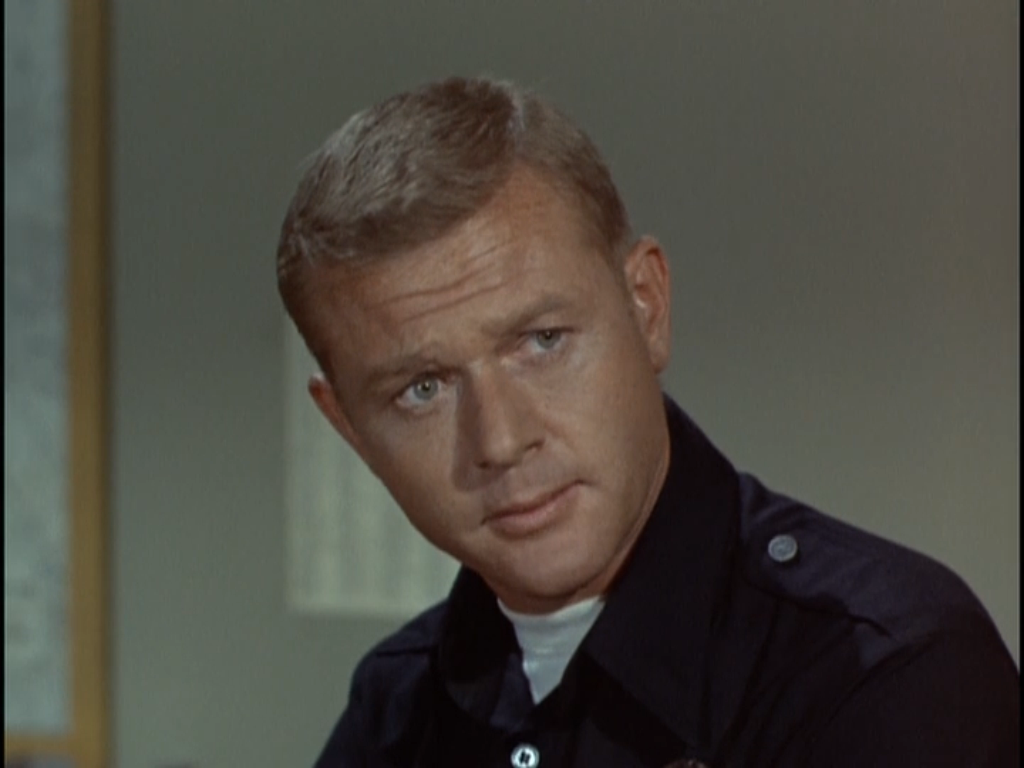
RIP Martin Milner


I wanted to write a few words about Martin Milner, who died over the holiday weekend at the age of 83.

During the first stage of his career, Milner was, frankly, a competent, solid, but thoroughly uninteresting actor who often played the "square" among a cast of crazies or at least more colorful characters. He was an Earp brother in GUNFIGHT AT THE OK CORRAL and a journalist in COMPULSION. His blandness actually made him stand out in the execrable SEX KITTENS GO TO COLLEGE amid weirdos like Mamie Van Doren, Jackie Coogan, Conway Twitty, John Carradine, and Vampira.

After 13 years in Hollywood, he finally became a bonafide television star in ROUTE 66, which teamed him with George Maharis (and later Glenn Corbett) in a groundbreaking one-hour drama about two handsome young men driving around America in a Corvette and having adventures.

But I want to talk about Milner's second television series.

Milner first worked with maverick television producer/director/star Jack Webb in several DRAGNET episodes in the 1950s. When Webb and Robert Cinader created ADAM-12 in 1968, they pegged Milner to star alongside a young, inexperienced actor named Kent McCord as a pair of uniformed police officers patrolling Los Angeles in a squad car. Milner was the veteran officer, Pete Malloy. McCord played rookie Jim Reed. On and off the screen, Milner was something of a mentor and friend to McCord, and their chemistry helped ADAM-12 run for seven seasons on NBC.

I loved ADAM-12 when I was a kid. It ran weeknights at 6:30 p.m. right after the 6:00 News on WCIA-TV in Champaign, Illinois, and I tried never to miss it. Like DRAGNET, ADAM-12 was based on actual LAPD cases, and each half-hour episode featured two to three different stories, so the pacing was quick. The show featured action, drama, violence, humor. Best of all, it seemed real. McCord was green as an actor when the series started, which actually worked in his favor playing a green patrol officer who is seen in the first episode making a grave error that could have killed him and his partner. With Malloy's (re: Milner's) steadying influence, Jim Reed grew to become an excellent policeman and his partner's equal in every way.

I caught up with ADAM-12 a few years ago and watched all 174 episodes. It holds up. It holds up because the stories are good. It holds up because the stories are told well -- not flashy -- but well by workmanlike directors like Hollingsworth Morse and Dennis Donnelly and Christian I. Nyby who knew pacing and drama and stayed out of the actors' way.

It holds up because it respects police officers. Do you realize that literally every cop show on the air today shows police officers routinely breaking the law? Trampling citizens' private rights. Ignoring due process. Think about it. They're supposed to be the heroes. Yet routinely -- every week -- you see Benson or Rust Cohle or McGarrett or the Mentalist or Vic Mackey or Raylan Givens...name a cop show, and the cops are routinely breaking the law, often hurting the citizens they're sworn to protect.

On ADAM-12, the cops were good people. To protect and to serve. And they did. ADAM-12 wasn't naive. It knew policeman weren't always good. That there was corruption and graft in the ranks, that some cops were violent or untrustworthy. But they weren't the good guys and weren't to be rooted for. Malloy and Reed knew this, and I think so did Milner and McCord.

Would ADAM-12 have been successful without Martin Milner? Probably not. He was likable, strong, authoritative, and absolutely completely 100% believable. It was a great show. And Martin Milner was great in it. TV Land misses him already.

Friday, September 04, 2015

Borderline

BORDERLINE is your only opportunity to see Charles Bronson pretend to be a retarded Mexican.

Ed Harris (THE ABYSS) earned a special Introducing credit for his first major role in a motion picture. Harris plays Hotchkiss, a “coyote” who takes money to smuggle undocumented aliens across the Mexican border into California. Bronson is Jeb Maynard, a Border Patrol officer who wants Hotchkiss’ ass for killing his partner (Wilford Brimley) and doesn’t wanna hear any “probable cause crap” outta his men investigating the murder.

Directed by Jerrold Freedman (KANSAS CITY BOMBER), who mostly worked in television, BORDERLINE relies less on action than one might expect from a Bronson vehicle. The script by Steve Kline (LOU GRANT) is in the police procedural mode, as Maynard and his new rookie partner (Bruno Kirby) follow the clues to Hotchkiss, who learned his lessons in killing from the United States government in Vietnam, and beyond to the white collar executives pulling the strings on the flesh smuggling operation for their skyscraper offices.

Maynard's plan involves recruiting the mother of a young boy also murdered with Brimley and using her to smuggle both of them (he’s playing “slow” because his Spanish isn’t very good) into the U.S. in order to infiltrate Hotchkiss’ organization. That we know Hotchkiss is the killer means the story has few surprises, and the PG rating cuts down on the star’s trademark gore and violence. However, official cooperation from the U.S. Border Patrol lends the production an air of realism and respectability that makes it enormously watchable.

Monday, August 31, 2015

The Marine 4: Moving Target

Congratulations to Mike “The Miz” Mizanin, the first WWE wrestler to star in two consecutive MARINE movies. John Cena starred in the entertaining throwback THE MARINE, which garnered a short theatrical release through 20th Century Fox. Ted DiBiase Jr. took over the title role in the direct-to-video sequel THE MARINE II with Mizanin starring in THE MARINE 3: HOMEFRONT. To beef up the star power, WWE films gave The Miz a popular co-star, Danielle Moinet, better known to wrestling fans as diva Summer Rae.

Alan McElroy, a veteran of the HALLOWEEN and WRONG TURN franchises, took inspiration from the original MARINE and delivered another story about well-armed bad guys and a Marine chasing each other through the woods (though, finally, a MARINE movie neglects to take the hero’s loved one hostage). Jake Carter (The Miz) is one of several bodyguards assigned to protect Olivia Tanis (LEPRECHAUN: ORIGINS’ Melissa Roxburgh), a whistleblower reluctantly willing to testify against a defense contractor that built faulty body armor for American troops. Their convoy is ambushed by the defense contractor’s hired mercenaries, including leader Simon Vogel (Josh Blacker) and badass sniper Rachel Dawes (Rae), leaving only Carter and Olivia alive.

The attack happens thirteen minutes in, and everything after is pretty much one long chase and gun battle. While that may be enough to keep undiscerning action fans happy, THE MARINE 4 has little else to distinguish it. Mizanin is a poor actor, and he’s playing someone who’s kinda dumb. Roxburgh’s character is also kinda dumb and kinda mean too. While that could make for an interesting relationship — the hero who has to protect somebody he doesn’t like — McElroy and director William Kaufman (ONE IN THE CHAMBER) aren’t interested in having anybody think too much.

As for Rae, her role is minor and not proportional with her billing on the Blu-ray packaging. She has almost no dialogue and no screen presence. Kaufman’s direction is sloppy. When Vogel’s men loudly shoot up a police station with automatic weapons, cops in the next room are taken by surprise. Maybe their hearing aids were turned off. CGI explosions and muzzle fire and bullet hits are distracting, as is unconvincing day-for-night photography. Shooting a zillion bullets at a speeding pickup truck results in only a few bullet hits. The devil is in the details, William.

Friday, August 28, 2015

Martial Law II: Undercover

Jeff Wincott (LAST MAN STANDING) is the new Martial Law in the sequel to MARTIAL LAW, which brings back Cynthia Rothrock (GUARDIAN ANGEL) as his former partner, Billie Blake. Directed by Kurt Anderson, making his debut after producing pictures like PARTY LINE, THE BANKER, and MARTIAL LAW (Steve Cohen, the latter film’s director, serves as producer on the sequel), MARTIAL LAW II: UNDERCOVER finds Sean “Martial Law” Thompson (Wincott) promoted to detective and transferred to a new division.

Almost immediately, Thompson is embroiled in controversy and corruption. He believes a colleague’s drunk-driving death was no accident and that Spencer Hamilton (Paul Johansson, the director and star of ATLAS SHRUGGED, PART I), a wealthy nightclub owner, is involved. Recruiting Billie to poke around Hamilton’s club in the guise of a bartender, Thompson finds a steady stream of karate-happy ambushers between him and the truth. To no one’s surprise, none are left standing by the time the finale rolls around at the good old tried-and-true power station. Because he’s Martial Law.

Both Rothrock and Wincott were among the DTV action genre’s most dependable stars in the 1990s, and MARTIAL LAW II is a terrific example of why. Both are able to perform complex and exciting martial arts moves without quick cutting or substituting fight doubles. The martial arts scenes are fairly fast and violent for an American direct-to-video movie, boasting some nifty choreography by Jeff Pruitt, who did an even better job staging the action in Wincott’s next film, the excellent MISSION OF JUSTICE.

Casting the perennially strange Billy Drago (DELTA FORCE 2) in a straight role as Wincott’s boss seems like an odd call on the surface. The karate studio of Jun Chong, star of the memorably bad L.A. STREETFIGHTERS, is a location. Anderson and Wincott also made, in addition to MISSION OF JUSTICE, MARTIAL OUTLAW, which sounds as if it should have been another sequel, but isn’t.

Thursday, August 27, 2015

Martial Law

You’ve probably forgotten, but Chad McQueen — son of actor Steve McQueen — was a star in direct-to-video movies in the 1990s. Don’t be too hard on yourself. Even his producers knew he couldn’t carry even a minor film like MARTIAL LAW, which is why he was usually teamed up with another top-of-the-bill action star. Here it’s Cynthia Rothrock (CHINA O’BRIEN) as his partner and David Carradine (DEATH RACE 2000) as the heavy to relieve McQueen’s load.

McQueen plays Sean Thompson, a badass Los Angeles cop with the badass nickname of “Martial Law.” Even though he’s a uniformed cop in a squad car, Thompson is the guy the bosses call when they need a badass job performed like busting a punk in a crowded nightclub. It wouldn’t do for Martial Law to have a lady friend who wasn’t badass, so he partners on and off the job with Billie Blake (Rothrock), a badass cop who works double shifts to pay rent.

Thompson is investigating a hot car ring led by sinister suit-wearing Dalton Rhodes (Carradine), whose badass credentials are firmly established when he kills Professor Toru Tanaka with a five point palm exploding heart technique. It isn’t just a case for Martial Law, no sir. It’s personal, because his younger brother Michael (Andy McCutcheon) is a member of Dalton’s gang.

Steve Cohen was a second assistant director on several films and television series before producer Kurt Anderson (PARTY LINE) promoted him to director. With help from stunt coordinator Philip Tan, Cohen does a steady job helming a procession of good chases and fights, including one between Rothrock and Benny “The Jet” Urquidez. Carradine had a habit of occasionally walking through pictures like this, but he was such an interesting actor, he could usually get away with it. Here he has a visibly good time being David Carradine, and it was probably good for McQueen that the two don’t share much dialogue. I shouldn’t be so hard on Chad. He’s kinda short and dumpy, but he’s handsome enough and he can throw a convincing punch. He and Rothrock are convincing as a caring couple too.

MARTIAL LAW is a standard DTV action movie, but an entertaining one. The climax pits McQueen against Carradine and Rothrock against Tan, and it’s exciting. Cohen sets an earlier suspense scene at the Griffith Park observatory at night, and McQueen shows up at a crime scene with a paper airplane. Watching the diminutive Rothrock do her stuff against guys twice her size is always a good time. After headlining two CHINA O’BRIEN films, she was too good an action star to be backing up Chad McQueen, and it’s curious why Cohen and Anderson didn’t see the potential in the two stars switching roles. Rothrock returned for the superior MARTIAL LAW II: UNDERCOVER, but with Jeff Wincott (MISSION OF JUSTICE) starring as Martial Law and Anderson making his directorial debut.

Thursday, August 20, 2015

Blood And Lace

It’s been called the “sickest PG (sic) movie ever made,” and while this low-low-budget AIP shocker does contain elements of pedophilia, necrophilia, incest, torture, rape, blackmail, arson, murder, and child abuse, it’s not entirely inconsistent with other PG rulings of the era (think BILLY JACK or JAWS). “Not yet 21” Ellie (Melody Patterson, just four years after F TROOP and dubbed in some scenes by June Foray) is sent to an orphanage run by Mrs. Deere (Oscar winner Gloria Grahame) after her prostie mother is murdered in bed by a hammer-wielding maniac.

Independent and a little messed up by her mother’s killing, during which the assailant also burned down the house, Ellie immediately locks horns with the ultra-strict Mrs. Deere, who talks to her husband’s corpse and orders her drunken handyman Tom (Len Lesser, later SEINFELD’s Uncle Leo) to hunt down and murder kids who attempt to run away. They freeze the corpses in the cellar and bring them up to the “infirmary” whenever social worker Mullins (Milton Selzer) drops by to count heads.

Also in the mix is middle-aged bachelor Calvin Carruthers (Vic “Mel Sharples” Tayback), the town’s only police detective who’s working Ellie’s mom’s murder case and may have more than a professional feeling toward Ellie. A mystery man in flannel and an old-man mask wanders the grounds, and the hilariously overwrought canned music sounds ripped from a Republic serial.

Director Gilbert apparently never made another movie, but he had talent. He handles the sleazy and weird (why are 20-year-olds living in an orphanage?) screenplay by Gil Lasky (MAMA’S DIRTY GIRLS, also starring Grahame) with style, despite little money. The striking opening scene, filmed from the killer’s point of view and surprisingly graphic for a GP, prefigures HALLOWEEN. Character actors extraordinare Lesser and Tayback played comic heavies on THE MONKEES, among zillions of anonymous episodic TV guest star parts, and probably enjoyed receiving their own title cards on a feature. Making his film debut is Dennis Christopher, who earned a Golden Globe nomination for starring in BREAKING AWAY.

Wednesday, August 19, 2015

Scalpel aka False Face

Robert Lansing’s outstanding performance as a mad plastic surgeon anchors this sick chiller filmed in Georgia. Lansing, who starred in the television series 87TH PRECINCT, 12 O’CLOCK HIGH, and THE MAN WHO NEVER WAS, as well as dozens of episodic guest turns, plays Dr. Phillip Reynolds, whose daughter Heather (Judith Chapman, another busy TV actor who found long-running success on THE YOUNG AND THE RESTLESS) ran away a year earlier after she saw him drowning her boyfriend in the family pool (out of jealousy?).

Reynolds drowned Heather’s mother too. That death was chalked off as an accident by the authorities, but not by Heather’s grandfather. He dies and leaves his entire $5 million fortune to Heather, who isn’t around to collect. Reynolds wants that money. What is an unscrupulous, greedy plastic surgeon to do?

How about inviting a topless stripper, whom he finds laying in the street near death with her face beaten to a bloody pulp, back to his place with a scheme to reconstruct her features to resemble Heather. That way “Jane Doe” can collect the $5 million, sharing half with him, of course. What could go wrong? How about the real Heather returning to the Reynolds mansion and discovering her father in a sexual relationship with a woman who looks just like her!

Considering its broad portrayals of greed, murder, and incest, SCALPEL (which also saw release as FALSE FACE) is not quite as sleazy as it could have been. Or maybe should have been. Not a lot happens in terms of story turns, but what does happen is pretty entertaining, thanks mostly to the leads. Lansing played few film or television roles with as much range as the murderous Svengali Phillip Reynolds, and you can almost taste the glee he brings to the part. Chapman is also effective, even though director John Grissmer (BLOOD RAGE) and co-writer/producer/editor Joseph Weintraub don’t allow her to cut loose the way Lansing does.

One of SCALPEL’s failings as that it doesn’t provide much difference between Heather and her double — Chapman, as good as she is, plays them almost identically. However, any demerits earlier in the film are more than balanced out by Grissmer’s final reel, which throws in as many bizarre twists as the director and the writer can think of, including an insane ending perhaps more appropriate to a caper film, but entirely satisfying and laughable.

Arlen Dean Snyder (HEARTBREAK RIDGE) plays Lansing’s suspicious brother-in-law. DARK SHADOWS composer Robert Cobert provides the effective string-laden score. Originally released by tiny United International Pictures, which specialized in dubbed kung fu and sex films, SCALPEL also saw theatrical release by Avco Embassy and a VHS release by Charter Entertainment.

Sunday, August 16, 2015

Tattoo

TATTOO is a forgotten film, partially because of its general inaccessibility in the United States, partially because it isn’t very good. And although it wasn’t a hit, TATTOO received enormous press coverage at the time of its release because of star Bruce Dern’s claim that he and co-star Maud Adams (OCTOPUSSY) actually had intercourse on the set in front of director Bob Brooks’ camera — a claim he later repeated in his autobiography. Adams has always consistently denied it. A lot of Dern’s memoirs is bullshit, so I’m inclined to take Maud’s side.

As an American serviceman photographing a Japanese ritual, Karl Kinsky (Dern) became fascinated with the participants’ tattoos and became a tattoo artist in Hoboken. Brooks effectively delivers this backstory in about a minute; you just know a contemporary remake would spend forty minutes uselessly setting up Kinsky’s “origin.” Karl, whose childhood artistic pretensions were stifled by his family, who still disapprove of his occupation, is rather unbelievably hired by a high-fashion magazine to paint temporary tattoos on models for a big summer issue shoot.

One of the models is Maddy Summers (Adams, who must have been hired for her willingness to do nudity and not for her acting), with whom the sexually repressed Kinsky becomes unhealthily fixated. So he drugs her, kidnaps her, and tattoos her. He forces her to masturbate, but is unable to sleep with her until his masterpiece — a full body tattoo — is complete. In one of TATTOO’s many dumb moments, it’s revealed that Karl has also given himself one without answering how the hell he could tattoo an elaborate design on his own back and ass.

There’s very little stretch from Dern’s unhinged psycho mad scientist in THE INCREDIBLE 2-HEADED TRANSPLANT to his performance in TATTOO. Because he was typecast at the time — according to Dern, he took the TATTOO role only after the studio rejected him for Len Cariou’s part in FOUR SEASONS — Dern could play Karl Kinsky in his sleep. Even though he played the role with some thought — I like the way Karl, a former public telephone disinfector, holds a handkerchief over the phone receiver when he speaks into it — the leaden direction by the one-and-done Brooks (whose experience was basically British TV commercials and two SPACE: 1999 episodes) and the uncompromising yet heavy-handed screenplay by Joyce Buñuel (who was married to Luis Buñuel’s son) let Dern down.

Wednesday, August 12, 2015

The Marine

THE MARINE marks the screen debut of WWE wrestler John Cena. Considering how flamboyant professional wrestling is, Cena seems like an unlikely selection for film stardom, as he comes across as dull and expressionless, no more than a slab with ridiculously huge muscles. He got better as an actor later, and was funny in 2015’s TRAINWRECK. In THE MARINE, Cena plays John Triton, a U.S. Marine who is drummed out of the Corps for killing nine terrorists and rescuing three fellow Marines singlehandedly. For disobeying a direct order by not sitting on his ass until backup could arrive, he accepts a premature discharge and returns home to his wife Kate (Kelly Carlson from NIP/TUCK and STARSHIP TROOPERS 2).

John and Kate decide to take a trip, but are waylaid at the gas station by psycho diamond thief Rome (a hammy Robert Patrick, the recipient of a TERMINATOR gag) and his gang, who kill some cops, blow the place up, and jet outta there with Kate as a hostage. Triton, who takes a ridiculous amount of physical punishment without showing more than slight scratches, jumps into the souped-up police cruiser, which looks like something out of BLADE RUNNER, and chases them. The laughs grow to a fever pitch when Triton loses control, flips the car into the air and upside down, and leaps out of it as it plunges over a cliff and into the water below. The punchline is that the bad guys continue shooting at the car, even though it's flying over their head, over a cliff, and on fire. How many times did they think they could kill that fucking car?

Triton, completely unscathed except for a half-inch red mark under his eye (you gotta see this crash to believe it), pursues the baddies into the "swamp." The rest of THE MARINE pretty much plays out exactly as you guess it will. The lame twist reveals that Rome's secret partner is the only other character in the film and the only person it could be. The whole story boils down to a fistfight between bodybuilder Cena and 50-year-old Patrick, so you can imagine how that plays out.

THE MARINE is simple and fast-paced. It’s kinda the poster child for Dumb B-Movie. It has some fun action sequences, terrible CGI, a couple of gorgeous women, and welcome humor (the often intense Patrick is pretty hilarious). The characters try to convey their treacherous conditions while traipsing through the “jungle,” but the landscape looks like a dead forest, and the "critters" like a snake and alligators are never seen in the same shot as the actors, kinda like a Jungle Jim programmer. The credits reveal that Australia substituted for "South Carolina," probably to save money, but the fakery doesn't work.

One benefit to filming in Australia was that debuting director John Bonito (his next movie was CARJACKED five years later) got David Eggby, MAD MAX's cinematographer, to shoot it, so it doesn't look too bad. Making Cena seem more human would have been an enormous improvement. He takes the brunt of several massive explosions, blows to the head, crashes...he even hangs onto the side of a semi-truck as it smashes through buildings. We're used to superheroics in our action movies, but even Indiana Jones felt pain. John Triton really is, as one character says, The Terminator.

Tuesday, August 11, 2015

Love And Bullets

Definitely not one of Charles Bronson’s best star vehicles, though LOVE AND BULLETS has a few points in his favor. Location shooting in Switzerland is definitely one of those points, as are the great supporting cast of character actors and several well-crafted action scenes directed by COOL HAND LUKE’s Stuart Rosenberg (John Huston is rumored to have directed some of LOVE AND BULLETS, but he bowed out during pre-production for health reasons).

Definitely not in the film’s favor are the performances by its leading lady and its chief villain. You would think I would be inured to embarrassing hambone acting by Jill Ireland and Rod Steiger by now, but not yet. Ireland was never a good actress — there’s a reason her husband Bronson was the only one who hired her — but her decision to play her role as gangster’s moll Jackie Pruitt with a combination Southern accent/ditzy blonde voice was not among her best. At the same time, Steiger, one of the worst actors ever to win an Academy Award, plays mob boss Joe Bomposa with a subtlety that matches his toupee, shouting every line and throwing in a stutter to boot.

Plot by writers Wendell Mayes (DEATH WISH) and John Melson (BATTLE OF THE BULGE) sends Arizona cop Charlie Conger (Bronson) to Switzerland to snatch Jackie and bring her back to America to testify against boyfriend Bomposa. Bomposa’s men, who include attorney Strother Martin (BUTCH CASSIDY AND THE SUNDANCE KID) and Val Avery (BLACK CAESAR), are a step ahead and convince their reluctant boss to recruit Italian hitman Vittorio Farroni (Henry Silva, playing the 64th Italian hitman of his career) to bump off Jackie.

From there, it’s pretty much a chase across snowbanks with Charlie and Jackie on foot, in a car, on a ferry, on a train, on a tram, on a hay wagon, in a boat with Silva and his assistants (why does he have assistants...to beef up the body count!) mowing down plenty of innocent bystanders, but clumsily missing the target. Strangely, Bronson and Ireland basically remade LOVE AND BULLETS as ASSASSINATION, which is also not a very good film. Bronson was not the most emotive of stars, but he doesn’t seem to be enjoying himself much here, despite a free Swiss vacation with his wife. Interestingly, he doesn’t shoot anyone, but he does turn a lamp into a blowgun.

Sunday, August 09, 2015

The Midnight Man

Burt Lancaster’s second and last turn behind the camera as a director was an adaptation of William Dale Smith’s excellent novel THE MIDNIGHT LADY AND THE MOURNING MAN. THE MIDNIGHT MAN doesn’t quite capture the small-town feel of the book, but it’s otherwise an absorbing, low-key Universal mystery. Lancaster shared writing, producing, and directing duties with Roland Kibbee, an Emmy winner for COLUMBO. And THE MIDNIGHT MAN plays very much like a COLUMBO with Lancaster and his heavy wool security-guard uniform taking the place of the raincoat-garbed Peter Falk.

Lancaster and Kibbee made many changes to Smith’s book — most of them unnecessary — though the skeleton is the same. Jim Slade (Lancaster) is a former Chicago police detective on parole who lands a job working third shift at a sleepy Georgia university, courtesy of his ex-partner Quartz Terwilliger (Cameron Mitchell). Although advised by his parole officer (Susan Clark) and the sheriff (Harris Yulin) to keep a low profile, Slade can’t help poking around when a trouble coed (Catherine Bach, later on THE DUKES OF HAZZARD) is murdered in her dorm room.

If you’ve watched enough mysteries, the killer’s identity is fairly obvious, but the way Lancaster and Kibbee fit the pieces together isn’t. In fact, the plot is surprisingly complex, and by the time Lancaster traipses around town arresting the myriad of co-conspirators involved in the murder, you almost expect him to reach behind the camera and slap handcuffs on the gaffer and the focus puller too.

Lancaster and Kibbee shot the film at Clemson University in South Carolina, but doesn’t take advantage of the location as well as they should. Many of its buildings look more or less like the Universal lot. Who knows — maybe they are. But with a mystery as intriguing as THE MIDNIGHT MAN’s and a supporting cast that includes Morgan Woodward, Robert Quarry, Mills Watson, Quinn Redeker, Charles Tyner, Linda Kelsey, and even THE CRIMSON PIRATE’s Nick Cravat, Lancaster and Kibbee’s film is well worth a watch. I’d love to see a more faithful film made from the book though.

Thursday, August 06, 2015

The Candy Snatchers

One of the great one-and-done directorial efforts, THE CANDY SNATCHERS was helmed by Guerdon Trueblood, a busy television writer (THE STREETS OF SAN FRANCISCO, ADAM-12) who jammed his only feature with all the rape, adultery, deceit, incest, dismemberment, and general all-around grime he couldn’t get past network censors. Strangely, Trueblood didn’t also write THE CANDY SNATCHERS, leaving that task to producer Bryan Gindoff, better known for Walter Hill’s outstanding action film HARD TIMES.

Good performances, quirky dialogue, and dollops of black humor distinguish THE CANDY SNATCHERS from other exploitation films containing the same ratios of nudity and violence. Three youths—blonde Jessie (TIffany Bolling), her brother Alan (Brad David, who says, “Do I get to ball her?”), and sensitive hulk Eddy (Trueblood’s college friend Vince Martorano, who receives an “Introducing” credit)—“snatch” teen Candy (Susan Sennett, later in BIG BAD MAMA) as she’s walking home from school and hold her for ransom. They instruct her jewelry store manager father Avery (Ben Piazza) to steal some of his store’s diamonds and meet them in a half hour, when they’ll return Candy to him safe and sound.

The perfect crime, they think, except for a monkey wrench they didn’t count on — Avery doesn’t want Candy back. She’s his stepdaughter, and with her dead, he stands to inherit $1 million from her trust fund. Candy’s only hope to survive her ordeal is a mute autistic child (Christopher Trueblood, the director’s son), who knows about the abduction, but can’t get his abusive parents to pay attention.

One of the darkest, most nihilistic crime dramas of a decade dotted with them, THE CANDY SNATCHERS is strictly drive-in fare (exploitation outfit General Film Corporation of THE CENTERFOLD GIRLS and LINDA LOVELACE FOR PRESIDENT fame released it), but well above routine. Bolling (BONNIE’S KIDS), who specialized in icy bad girls, scores high as the leader of the kidnappers, staying tough under pressure while struggling to keep demons from her past under the surface. David (EAT MY DUST) and Martorano (THE SEVERED ARM) also skillfully flesh out their characters with intriguing backstories furnished by Gindoff. Poor Sennett (OZZIE’S GIRLS) is a real sport, spending nearly all her screen time tied up and assaulted.

One wonders why Trueblood didn’t get around to directing again. In addition to his sure hand with the actors, he shows real storytelling talent and some visual flair. In fact, the crane shot that buttons the film is a real doozy sure to leave the audience something to think about. Robert Drasnin composed the TV-ish wacka-wacka score, but the musical highlight is the witty theme song, “Money Is the Root of All Happiness,” sung by Kerry Chater of Gary Puckett and the Union Gap.


Sunday, July 26, 2015

Street Crimes

Though one suspects ninety minutes of Character Actor Hall of Famers Dennis Farina (CRIME STORY) and Max Gail (BARNEY MILLER) sitting around shooting the breeze would be equally entertaining, STREET CRIMES is an entertaining crime drama with a heart.

Written and directed by Stephen Smoke, who had previously penned LIVING TO DIE for PM Entertainment, this is one of those action movies where every low-level street punk in L.A. is proficient in kickboxing. Luckily, so is ridiculously young-looking rookie cop Michael Worth (U.S. SEALS II), who gets razzed by fellow detectives Joe Banks and Gail for using his fists and feet instead of his gun.

Teamed with veteran Farina, who eats in almost every scene, Worth cleans up the streets by inviting the gangbangers to the gym for organized, refereed kickboxing matches with policemen. And it works. Everyone is having a good time beating everyone up, except druglord Gerardo (James T. Morris), whose business is suffering. Worth is as green as an actor as his character is as a cop, and Patricia Zehentmayr as his blind girlfriend is even worse, but the charismatic Farina (in ubiquitous Chicago Bears cap) is wonderful enough for all three (Dennis staring down a pedophile is worth a rental on its own). Smoke tries to build repartee among the cops, but it’s really Farina and Gail who make it work instead of Smoke’s clumsy dialogue.

Although STREET CRIMES has its share of action scenes, it’s as much social drama as crime drama. Smoke seems to care about people and using his little direct-to-video movie to make points and teach his audience something without getting preachy (Gail wears a D.A.R.E. T-shirt, for instance). Of course, Smoke leans on more than a few action-movie cliches — it would be hard not to at this budget level — but they play with energy and without cynicism. Worth’s first three features were kickboxing flicks for PM, but I’m unsure whether STREET CRIMES was made before FINAL IMPACT (also with Smoke) and TO BE THE BEST.

Friday, July 24, 2015

The Death Squad

Well, there’s no wondering where writers Ronald Austin and James Buchanan (CHARLIE’S ANGELS) came up with the idea for THE DEATH SQUAD, a quite good made-for-TV crime drama for ABC. It’s just amazing that producers Aaron Spelling and Leonard Goldberg were able to get it on the air a mere two weeks after MAGNUM FORCE hit theaters nationwide at Christmas 1973.

The plot is the same in both films: an honest police detective learns about a secret cadre of vigilante cops who are murdering criminals who evaded proper justice on a legal technicality. Here, it’s Robert Forster, in between BANYON and NAKIA, as a disgraced cop recruited back to the force by chief Bert Remsen (CODE OF SILENCE) and commissioner Dennis Patrick (HOUSE OF DARK SHADOWS) to investigate the killings of a dozen bad guys over the past six months in which the weapons were never found. He’s quickly recruited for the death squad by his new partner (pre-Lobo Claude Akins) and is stunned to learn that it was created by his kindly old mentor (Melvyn Douglas), now terminal with cancer.

The teleplay could have used at least another polish — not surprising assuming ABC commissioned it quickly when it heard Warner Brothers had MAGNUM FORCE in production. Some of the story points aren’t believable, but it also holds a few surprises. Forster is a strong, believable leading man, and Harry Falk (MEN OF THE DRAGON) skillfully delivers the suspense. Former Mama Michelle Phillips plays Forster’s love interest, the widow of Douglas’ dead cop son. Mark Goddard (LOST IN SPACE) and Kenneth Tobey (THE THING FROM ANOTHER WORLD) play other Death Squadders. THE DEATH SQUAD isn't quite as good as MAGNUM FORCE, but Forster and the brutal action make it better than routine.

Wednesday, July 22, 2015

The Private Eyes

Remember when Tim Conway was a movie star? Hot off his success as Carol Burnett’s impish second on her self-titled variety show, Conway moved into films, mostly with Disney (GUS, THE APPLE DUMPLING GANG) or Lang Elliott’s Atlanta-based International Picture Show Company (THE BILLION DOLLAR HOBO, THEY WENT THAT-A-WAY & THAT-A-WAY). Conway and fellow television sidekick Don Knotts (THE ANDY GRIFFITH SHOW) played well off one another as bumbling gunfighters in the APPLE DUMPLING GANG movies, so producer Elliott cast the comedy team in THE PRIZE FIGHTER as a bumbling (what else?) boxer and his trainer.

Unexpectedly, when released at Thanksgiving 1979, THE PRIZE FIGHTER became the top grossing film in the history of New World Pictures, spurring Roger Corman and Elliott to commission a pseudo-sequel, this time with Elliott also directing. THE PRIVATE EYES, which stars Conway and Knotts as bumbling (what else?) detectives, was somehow an even bigger hit than its predecessor — in fact, the biggest hit Corman’s New World ever released!

Conway and his PRIZE FIGHTER collaborator John Myhers wrote the screenplay, which casts Don and Tim as Inspector Winship and Doctor Tart, who work for Scotland Yard, even though they’re Americans and referred to as private eyes. The script shamelessly cribs YOUNG FRANKENSTEIN’s “Walk this way” joke and introduces a literal Chekhov’s (time) gun in the detectives’ first scene, so it’s perfectly suited to Conway’s and Knotts’, shall we say, less than subtle comic stylings.

Spoofing both Sherlock Holmes mysteries and Old Dark House thrillers, THE PRIVATE EYES is packed with sight gags, puns, pratfalls, and other cartoon slapstick aimed at kiddies and unassuming television watchers. The Yard sends Winship and Tart to the massive Morley Manor, where the lady and lord of the house were recently murdered by a hooded stalker who’s still skulking about the mansion’s secret rooms and passages.

Elliott serves up the requisite red herrings, which include stacked adopted daughter Trisha Noble (STRIKE FORCE), caretaker Stan Ross (WHOLLY MOSES!), maid Suzy Mandel (CONFESSIONS OF A DRIVING INSPECTOR), nanny Grace Zabriskie (TWIN PEAKS), chef John Fujioka (THEY CALL ME BRUCE?), groom Irwin Keyes (THE WARRIORS), and butler Bernard Fox (BEWITCHED). More bodies turn up, each accompanied by a note from the killer (one of Conway and Myhers’ funnier running gags), with the hapless Winship and Tart helpless to stop the killings.

Knotts and Conway, both of whom hosted eponymous variety shows in the 1970s, are experts at milking laughs from mediocre material, and what fun THE PRIVATE EYES offers comes from their mugging. Elliott shot on location at the remarkable Biltmore Estate in North Carolina, which is perfectly cast as an English manor. Carol Burnett’s bandleader, Peter Matz, composed the catchy score and theme for this PG-rated comedy. Though it was a major hit, Knotts and Conway didn’t do another sequel, though they and the rest of Burt Reynolds’ Rolodex made cameos in CANNONBALL RUN II.

Sunday, July 19, 2015

The Hunter (1980)

Three months after Paramount released THE HUNTER in theaters, Steve McQueen was dead. He was diagnosed with the cancer that would kill him at age 50 not long after completing production on THE HUNTER, and in some scenes he seems a little shaken.

It was something of a novelty then to see McQueen on the big screen. After 1974’s THE TOWERING INFERNO, he didn’t act in a nationally released film until TOM HORN in the spring of 1980 (Warners buried his adaptation of Ibsen’s AN ENEMY OF THE PEOPLE). THE HUNTER, McQueen’s final turn in front of the camera, came out a few months later.

THE HUNTER’s small scale and episodic structure seem more appropriate for a television pilot than a motion picture with one of the world’s most popular action stars. The director was Buzz Kulik, who had been working mostly on television movies and pilots at the time (Peter Hyams’ name on the screenplay indicates the CAPRICORN ONE director must have been set to direct at some point). He keeps the action chugging along at an entertaining pace, but nothing feels special about THE HUNTER. If only we could have known it would be all the McQueen we would ever get.

McQueen plays Ralph “Papa” Thorson, a real-life bounty hunter and a colorful personality. Most of us have one or two unusual quirks, but McQueen’s Thorson, as penned by Hyams and Ted Leighton (ELLERY QUEEN: DON’T LOOK BEHIND YOU), is entirely made of quirks. He drives an old car (poorly, in a cute nod to the star’s real racing career), collects old toys, has a pregnant young girlfriend, likes opera, and hosts all-night poker parties in which he never plays. As if chasing criminals for monetary reward wasn’t weird enough.

It would be easy to presume the script was left unfinished when Hyams left the picture, as McQueen basically bounces from one setpiece to the next, occasionally interacting with a character actor you recognize from TV (David Spielberg, Kevin Hagen, Wynn Irwin, Nicolas Coster, Richard Venture). Tracey Walter (MALONE) has more screen time as a psycho named Mason, who stalks and kidnaps Thorson’s girlfriend Dotty (Kathryn Harrold, always a welcome presence) — the only subplot that runs the course of the picture.

Fred Koenekamp’s photography is flat and unappealing, McQueen overplays the humor, and Michel Legrand’s score is one of the strangest ever composed for a major studio action picture. But the chase scenes are pretty great, including one between a Trans Am and a combine in a Nebraska cornfield (actually shot in downstate Illinois) and another on top of a Chicago “L” train that culminates in a car tumbling from the Marina City parking garage into the Chicago River. Adding to the excitement is McQueen, sick whether he knew it or not, doing some of his own stunts, kneeling on a train car.

Wednesday, July 15, 2015

On Her Majesty's Secret Service

After five turns as James Bond, Sean Connery finally said, “No more” (for now). Producers Harry Saltzman and Albert R. Broccoli turned to an unknown Australian model with no acting experience named George Lazenby to fill Connery’s shoes. His performance was universally blasted at the time, but in retrospect, it’s okay. Lazenby lacks the movie-star charisma of the other Bond actors, but he’s excellent at the physical action — probably even better than Connery. He doesn’t hold the screen the way Connery (or even Roger Moore, regarded as a lightweight) did as Bond, and James Bond really needs to be the coolest guy in the room.

One of the best directed and edited films in the 007 series, ON HER MAJESTY'S SECRET SERVICE suffers not just from Lazenby’s dramatic deficiencies, but also its early pacing. At 142 minutes, it’s the second longest Bond film (after CASINO ROYALE) and feels it, notably the interminable scenes with Bond and the girls at Piz Gloria. On the other hand, pretty much everything from Bond’s escape from Piz Gloria to the end is great: a cable car escape, a ski chase, an amazing car chase, an avalanche, a bobsled chase and the Bond series’ most downbeat conclusion.

Bond, having failed to secure megalomaniac Ernst Stavro Blofeld while destroying his operation at the end of YOU ONLY LIVE TWICE, has spent the last two years tracking him. His boss M (Bernard Lee) takes Bond off the case at the same time 007 begins a romance with the reckless Contessa Tracy di Vicenzo (Diana Rigg), perhaps at the instigation of her gangster father Draco (Gabriele Ferzetti).

Bond and Tracy fall in love, and he considers marriage. Through Draco’s connections, Bond gets a line on Blofeld (Telly Savalas), who has opened an allergy-research clinic atop Piz Gloria in the Swiss Alps. The clinic is, of course, a front for Blofeld’s latest world-domination plot, which involves brainwashing beautiful young women from different countries into releasing a virus that could destroy the human race.

Nitpicking a James Bond plot is besides the point, though it’s hard to ignore the fact that Blofeld doesn’t recognize Bond, posing as a genealogist named Sir Hilary Bray, as the agent who blew up his volcano two years earlier. The story’s biggest hangup is Hunt’s insistence on including a treacly BUTCH CASSIDY-style romantic montage with Bond and Tracy mooning over each other while Louis Armstrong sings John Barry and Hal David’s “We Have All the Time in the World.”

Speaking of Barry, his sixth consecutive Bond score is among his best, and OHMSS’ technical and production credits are impeccable. Except the poor process photography. Why the early Bonds had such poor process work is a mystery. Despite all the great stuff in the film, OHMSS’ box office, while high, was lower than YOU ONLY LIVE TWICE’s. Lazenby decided to stop after one Bond film (his career never recovered), and a $1 million salary lured Connery into returning for DIAMONDS ARE FOREVER.

Monday, July 13, 2015

Doomsday Machine

Of course you think you want to see unctuous deejay Casey Kasem, M*A*S*H goody-two-shoes Mike Farrell, obnoxious MAKE ME LAUGH host Bobby Van, HIGH ROLLERS babe Ruta Lee, and one-time Tarzan Denny Miller in a cheap, stupid, boring space movie. DOOMSDAY MACHINE was literally never finished. Production shut down twice, quickie specialist Lee “Roll ‘Em” Sholem shot new footage with different actors after the fact, and the film somehow got released five years after production began. Miller and co-star Mala Powers didn’t even know it was out until they (separately) came across it on television.

Blue sweatshirts double as astronaut wear — a good example of the penny-pinching in Hope’s production. The superfluous prologue and the incomprehensible climax are obviously Sholem’s footage, but don’t blame the hired hand for fumbling an impossible task. Poor Grant Williams, who starred in a genuine science fiction classic, THE INCREDIBLE SHRINKING MAN, is reduced to playing a crude, thuggish rapist, which is at least one note more than almost everyone else gets to play. Somehow, Van scored top billing for his role as the odious comic relief — same as he played in THE NAVY VS. THE NIGHT MONSTERS, which is actually better than this movie. Almost everything is better than this movie. Oral surgery is better than this movie.

Seven astronauts bound for Venus are waylaid on their way to the launch pad by Air Force officers who replace three of the crew with women (“Are you insane?” is one enlightened astronaut’s reaction to — gulp — girls on a spacecraft). Hours after launch, Earth is destroyed by the doomsday device teased in the opening scene of a Chinese lady spy tossing a cat over a wall to distract the guard protecting it.

Oh. So that’s why the women are there. To keep the human race alive. It’s three on three with poor old Henry Wilcoxon (MRS. MINIVER) left out. At least they have sweet Barcaloungers for a little novelty in their race-perpetuating. Not that they get to first base after two of the crew are sucked out the airlock and two others go floating in space in a filmmaking dodge so cynical, it makes Michael Bay look like Frank Capra.

Wednesday, July 08, 2015

Along Came A Spider

Morgan Freeman returns as criminal profiler and Washington, D.C. cop Alex Cross in 2001's ALONG CAME A SPIDER, a sequel to the limp 1997 thriller KISS THE GIRLS. Instead of Ashley Judd, this time he’s teamed up with Monica Potter (TV’s PARENTHOOD) as Jezzie Flannigan, an agent of the United States Secret Service.

The case that brings them together is the kidnapping of little Megan Rose (Mika Boorem), the daughter of an undistinguished U.S. Senator (Michael Moriarty). Both are fighting demons: Cross, the death of his partner eight months earlier, Flannigan, the guilt of allowing Megan to be taken from school by one of her teachers, Gary Soneji (Michael Wincott). Soneji is one of those super-villains that only inhabit mediocre thrillers—brilliant, obsessed, cool, collected, a master of disguise, and the kind of guy who intentionally leaves behind arcane clues that no real cop would ever spot.

As it turns out, Soneji is just about the most believable character in the film, which delivers not one, but two ludicrous plot twists that come as a surprise only because they’re too ludicrous to anticipate. Freeman is silk, as you would expect, and acts rings around the miscast Potter, who lacks the gravitas to inhabit a role with so many sides. Director Lee Tamahori (DIE ANOTHER DAY) delivers a slick, professional product, but an empty one.

Although ALONG CAME A SPIDER, based on James Patterson’s 1992 novel—his first about Alex Cross—grossed more than KISS THE GIRLS did, Paramount didn’t make a third Cross movie. Tyler Perry, of all people, played the character in 2012’s ALEX CROSS, a much worse film.

Sunday, July 05, 2015

Invasion U.S.A. (1985)

Chuck Norris was already one of America’s biggest box office stars before this crazy, jingoistic action movie opened at number one. Courtesy of Cannon’s Menahem Golan and Yoram Globus and featuring what may jokingly be called a screenplay co-written by Norris, INVASION U.S.A. is brainless fun with zero characterization, hardly any dialogue spoken by its star, and perhaps the worst female lead (in terms of performer and character) in the history of action movies.

Retired “Company” agent Matt Hunter (Norris) spends his life wrestling alligators and trading quips with grizzled Indian trader John Eagle (Dehl Berti) outside his shack in the Everglades. Reluctantly, he returns to active duty when hundreds of godless Commie terrorists, led by his old foe Rostov (Richard Lynch), invade the U.S.A. via Florida with a massive plan to blow up school buses, shoot up shopping malls, turn Americans against authority, and ruin Christmas.

For the most part, law enforcement is nowhere to be seen, except for a couple of government spooks (one played by Eddie Jones) and Hunter, whose condition for stopping Rostov is “I work alone.” So while hundreds of baddies roam the Sunshine State mowing down citizens, Hunter cruises aimlessly in his pickup truck with an amazing sixth sense for finding the killers, blasting them with his twin-holstered Uzis, and moving on to the next target. More often than coincidence would allow, he encounters an obnoxious female journalist, played horribly by Melissa Prophet (GOODFELLAS), who shows her gratitude at being rescued by Hunter by constantly calling him “Cowboy.”

Granted, the reporter is such an ill-conceived and superfluous character that Meryl Streep couldn’t have made her anything but an annoying appendage. But that’s the kind of perplexing mess INVASION U.S.A. is — an absurd series of setpieces in which Norris stumbles onto someone in danger and blows the bad guys away. There’s no detective work involved in which he is able to deduce where Rostov’s men will pop up next. No, he just drives around until he accidentally discovers the script’s next action scene.

Rostov’s plan, as far-fetched as it seems, would stand a better chance of succeeding if he’d just give it priority, but, noooo, he has to kill Chuck Norris first. You see, years before, Chuck had interrupted one of Rostov’s terrorist plots, and—gulp—kicked the Russian square in the face. One time. It must have been one heckuva kick, because Rostov still has nightmares about it, and refuses to fully commit himself to the invasion until Chuck is dead.

A lot of bullets fly in this movie, and director Joseph Zito (FRIDAY THE 13TH—THE FINAL CHAPTER), who previously worked with Norris on MISSING IN ACTION, at least keeps things moving quickly, tossing in a few smooth dolly shots and splashing enough blood on the screen to keep nondiscriminating audience members (like me) from getting bored. Working with a reported $10 million budget, Zito manages to get it all on the screen, photographing enough exploding houses, squibbed chests, and burning men to keep Cannon’s stunt crew plenty busy. INVASION U.S.A. may be stupid, crude, and confusing, but it certainly isn’t boring and is typical of the fun but empty-headed action movies Cannon was releasing in the 1980s.